
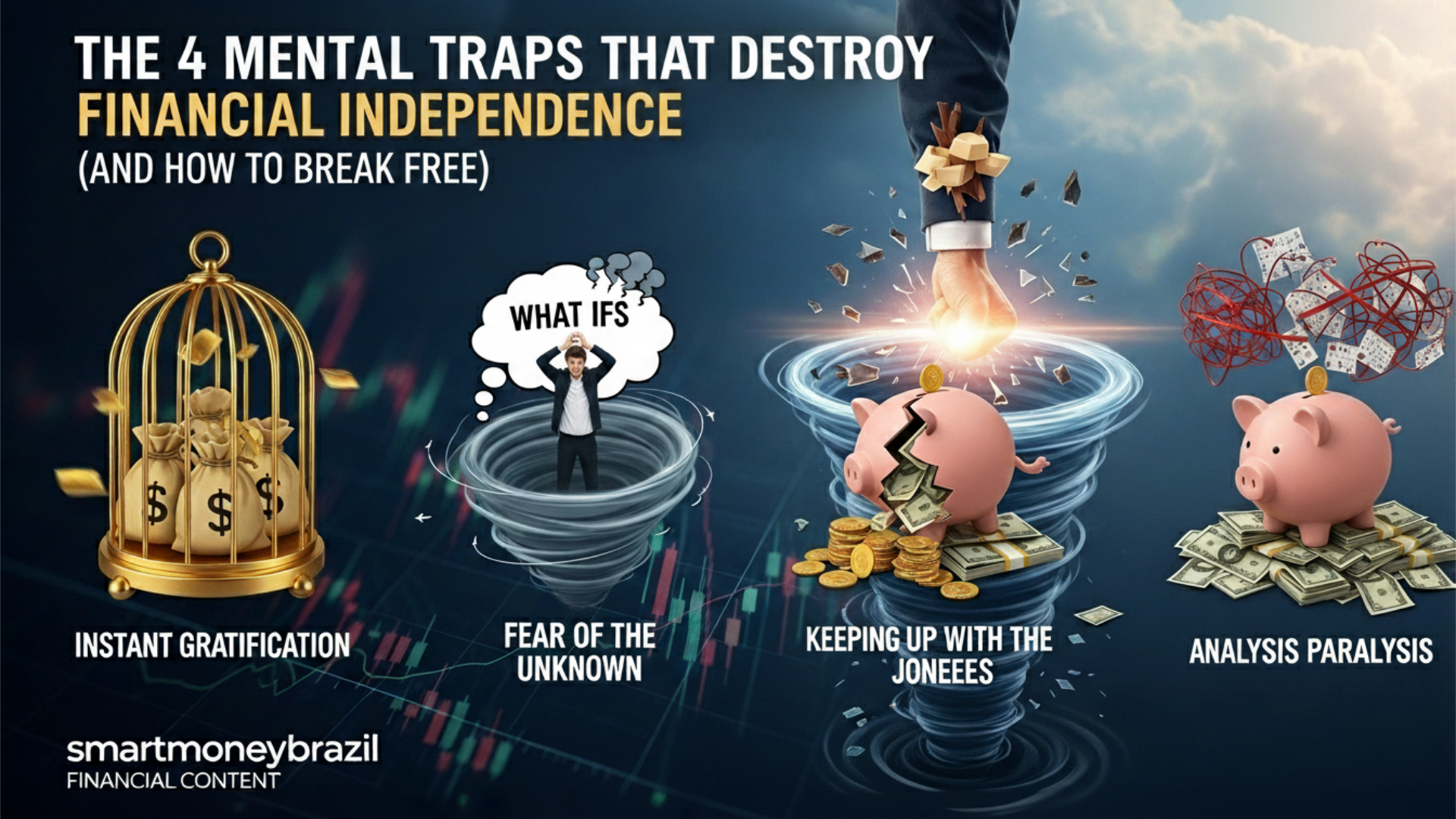
Most people don’t fail financially because of lack of money.
They fail because of mental patterns, automatic behaviors, and emotional decisions that sabotage even the most logical financial plan.
In this article, you’ll discover the 4 hidden mistakes that quietly drain your wealth-building potential — and learn how to overcome them using practical, actionable strategies.
1. Social Conditioning: The Legacy That Holds You Back
We all grow up with unspoken rules about money — absorbed from our family, school, and society. But here’s the problem:
What society teaches us about money is often outdated, emotional, and self-sabotaging.
Take Brazil, for example. The country’s educational and cultural roots often prioritize obedience, simplicity, and sacrifice over entrepreneurship, risk-taking, or wealth building.
Many grow up hearing:
- “Rich people are selfish.”
- “You need to work hard, not smart.”
- “Better to live simply than to think big.”
As a result, people avoid talking about money. They don’t negotiate with governments. They accept poor public services without demanding value. They see ambition as a flaw, not a virtue.
In contrast, wealthier nations often teach children to:
- Think in the long term
- Invest early
- Negotiate services and taxes
- Leave a legacy for future generations
This difference in cultural mindset is the first major block in your financial journey.
If you want a wealthy life, you must unlearn the poverty stories you’ve inherited.
2. Poor Decision-Making: Every Choice Creates Your Future
Ever made a financial decision that felt good in the moment… but hurt later?
You’re not alone.
We make daily choices that shape our financial health — from what car to buy to how much we spend on dinner. But most of us don’t pause to ask:
“Will this decision actually improve my life?”
Let’s take an example:
You buy a big house to feel successful. But the new neighborhood comes with higher taxes, utilities, and pressure to upgrade your lifestyle. Suddenly, you’re less free than before.
Or you finance a car that impresses others, but it limits your ability to invest or take a better job far away.
This is what we call emotional spending disguised as progress.
Want to break the cycle?
Ask this one question before every big purchase:
“Will this decision create more freedom — or more stress?”
Financial freedom isn’t about how much you earn. It’s about how intentionally you spend.
3. The Comfort Zone: Your Brain’s Sneakiest Trap
Let’s get honest: Your brain is lazy — by design.
It wants to protect you from discomfort, new challenges, and potential embarrassment. That’s why sticking to your old habits feels safe, even when those habits keep you broke.
This is the comfort zone — a mental prison where change feels scary, even if life outside looks better.
Examples:
- You don’t start investing because the stock market feels too complex.
- You keep eating out daily because cooking sounds inconvenient.
- You avoid budgeting because facing the truth might hurt.
Here’s the good news: Comfort zones can be expanded.
Start small. Change one Sunday routine. Replace one bad habit. Say “no” to one unnecessary expense. Then build momentum.
The more discomfort you embrace today, the more freedom you’ll enjoy tomorrow.
4. Lack of Financial Knowledge: The Cost of Staying Ignorant
Financial illiteracy is one of the most expensive conditions in the world — and most people suffer from it silently.
Why?
Because we assume finance is boring, hard, or only for the rich.
But here’s the truth:
- The less you know, the more you pay.
- The less you understand, the more you depend on others.
- The less you learn, the longer you stay stuck.
Smart people make dumb money decisions every day — not because they’re dumb, but because they lack the tools and confidence.
Think of knowledge as a financial multiplier:
- Learn about interest, and you’ll stop losing money to credit cards.
- Learn about investment risks, and you’ll avoid scams.
- Learn about taxes, and you’ll keep more of what you earn.
The Path to Real Change
These four traps — social beliefs, poor choices, comfort zone, and ignorance — can be overcome, but only with conscious effort.
Here’s a proven 5-step process to start your transformation:
✅ Step 1: Acknowledge the Mistakes
No blame, no guilt — just awareness.
Ask yourself:
- What financial habits did I learn growing up?
- What beliefs about money hold me back?
- What mistakes do I keep repeating?
✅ Step 2: Define What You Really Want
Not just “retire one day” or “have more money.” Be specific.
- Do you want freedom from a 9-to-5 job?
- Do you want to travel every year?
- Do you want to help your family or build a legacy?
The clearer your goals, the easier it is to stay motivated.
✅ Step 3: Learn the Right Tools
You don’t need an MBA to build wealth — just the right basics:
- Budgeting
- Compound interest
- Tax optimization
- Credit and loan management
- Diversified investments
Learn at your pace. But never stop learning.
✅ Step 4: Build Your Personal Strategy
There’s no one-size-fits-all plan. Your strategy should match:
- Your income
- Your values
- Your risk profile
- Your goals
Don’t copy influencers. Create your own map to wealth.
✅ Step 5: Review, Refine, Repeat
Financial planning is never “done.”
Every year, review your progress:
- What’s working?
- What needs adjusting?
- What can be improved?
Make it a habit, not a one-time project.
Final Thoughts
Your financial struggles are not your fault — but they are your responsibility.
By recognizing these four mistakes and taking action to correct them, you begin to reclaim your power over money, over your future, and over your choices.
Wealth starts with awareness.
Freedom begins with learning.
Your new life is built one smart decision at a time.
Ready to break the cycle?
Let’s move to the next step of your transformation.