
Have you ever felt like you’re doing everything “by the book” financially — yet you’re still unsure whether you’ll retire with comfort and security?
You’re not alone.
Many people follow all the conventional advice: save a little, avoid big expenses, wait for retirement. Still, when they picture the future, they feel fear instead of confidence.
Why?
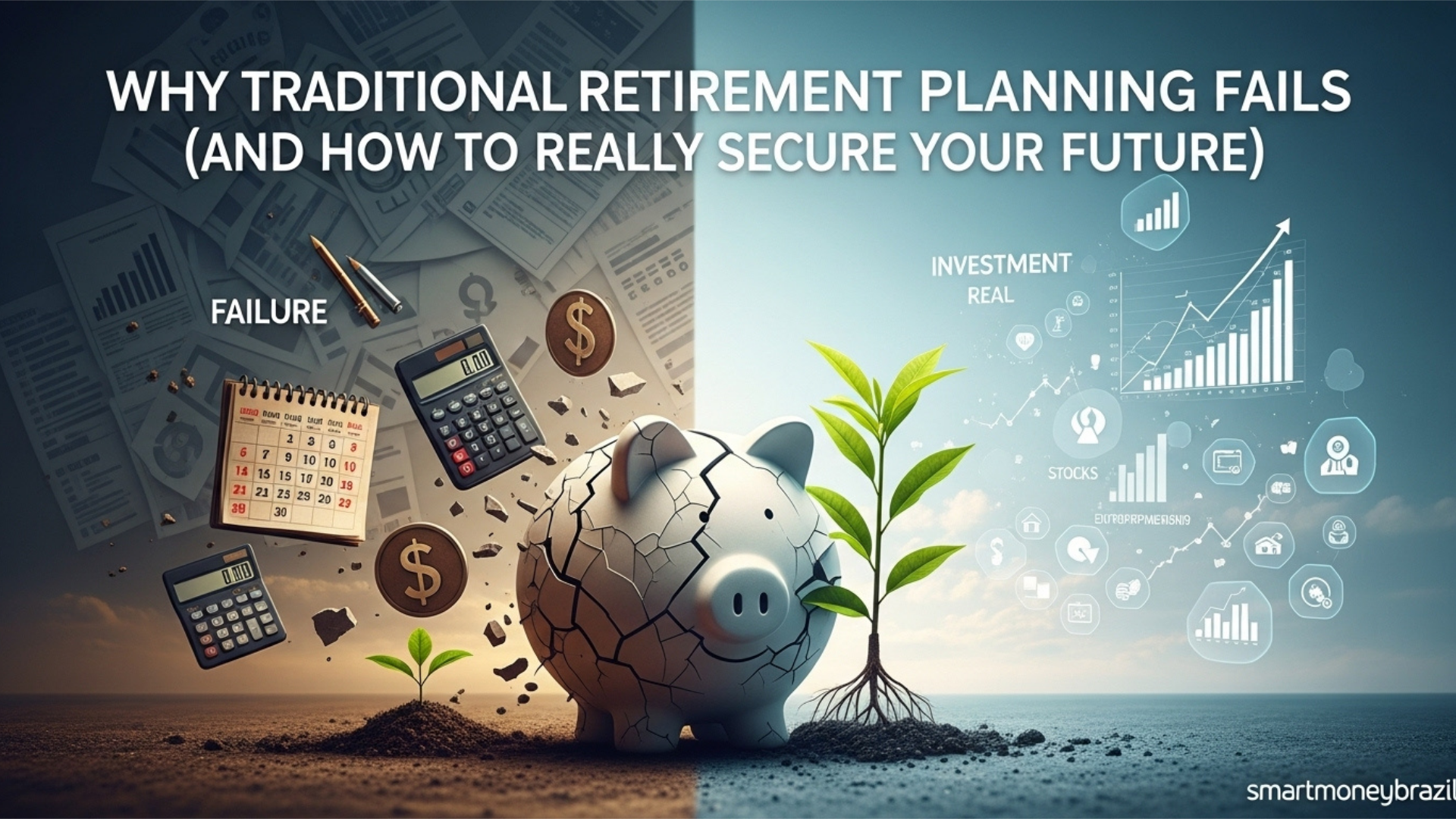
Because traditional financial planning — the kind most people were taught — no longer works in today’s world.
In this article, we’ll uncover the hidden flaws of traditional retirement strategies, and more importantly, show you how to shift your mindset and create a plan that actually leads to freedom, peace, and a life you want to live.
The Silent Anxiety of Retirement
If you’ve ever thought…
“What if I never have enough to stop working?”
“What if I get sick and my savings disappear?”
“What if I work my whole life and retire… bored and broke?”
You’re tapping into a deep and widespread fear.
Even people who earn well, save consistently, and live within their means often feel uncertain about the future.
That’s not because they’re doing something wrong. It’s because the system they’re relying on is outdated.
The Problem With Traditional Planning
Most people were taught a linear formula for financial life:
Get a job → Work 35+ years → Cut expenses → Save what’s left → Retire at 65
But here’s what traditional planning doesn’t account for:
- Inflation that destroys purchasing power
- Career changes and income gaps
- Increased life expectancy
- Health emergencies
- Emotional burnout
- A desire to enjoy life before 65
Worse, this model promotes sacrifice without vision — the idea that success means cutting back, holding on, and waiting for a future that may or may not feel fulfilling.
A Dangerous Disconnect: Logic vs. Emotion
Here’s the truth: People don’t plan with numbers. They plan with feelings.
Even the smartest spreadsheet won’t work if it doesn’t align with your emotional reality.
Let’s say you create a strict retirement plan:
- No travel
- No hobbies
- No margin for unexpected fun or emergencies
Sure, on paper it works. But in practice? You’ll hate it. You’ll abandon it. Or worse — you’ll follow it, and live a joyless life.
This is the fatal flaw of many retirement plans: they’re logical but emotionally unbearable.
The Lie of “Just Cut Your Expenses”
One of the most common — and toxic — pieces of financial advice is:
“Just reduce your lifestyle and you’ll be fine.”
Really?
Try telling that to a person with kids, aging parents, medical needs, or a desire to live a meaningful life. Just cutting expenses isn’t a plan — it’s a shortcut to frustration.
Yes, controlling your spending matters. But planning based only on limitation and sacrifice will never bring fulfillment.
People need strategies that allow them to grow, contribute, and dream — not just survive.
The Retirement That No One Wants
Let’s picture the retirement most traditional plans lead to:
- You stop working around 65
- You depend on a fixed income (from pension or government)
- Your standard of living slowly declines
- You fear running out of money before you run out of life
- You feel bored, irrelevant, or lost
That’s not retirement. That’s a life on pause.
It’s time to question the entire concept of retirement.
A Better Question: What Kind of Life Do You Want?
Instead of asking:
“How much do I need to stop working?”
Ask:
“What kind of life do I want to build — now and in the future?”
Do you want to:
- Travel every year?
- Work part-time doing something meaningful?
- Start a small business?
- Support your children or causes you believe in?
- Live in a peaceful place with minimal stress?
These goals require more than a financial plan — they require a vision. And that vision must be alive and adjustable, just like your life.
Why Government and Corporate Plans Aren’t Enough
Many people put their faith in:
- INSS (in Brazil)
- Social Security (in the U.S.)
- Company pension funds
- Severance packages or FGTS
Here’s the hard truth: These are not designed to give you freedom.
They were created in a different era — when people retired at 60 and died at 70. Today, people are living into their 80s and 90s.
Relying solely on these systems is like building a house on quicksand.
What Real Financial Freedom Looks Like
True financial independence isn’t just about stopping work. It’s about having the power to choose:
- Where you live
- What you do
- Who you spend time with
- What you say yes or no to
To achieve that, you need more than a calculator. You need a method that includes emotion, purpose, flexibility, and growth.
Introducing: Conscious Planning
Conscious planning means building a financial path that reflects:
✅ Your values
✅ Your priorities
✅ Your current reality
✅ Your desired future
It’s not about perfection — it’s about progress.
Instead of focusing only on how much you need to retire, focus on:
- How do I want to live now and later?
- What makes my life meaningful?
- What brings me peace, joy, and freedom?
- What financial actions support that life — today?
6 Shifts for Smarter Financial Planning
Here are six mindset shifts to replace outdated strategies:
1. From Sacrifice to Strategy
Don’t just cut — optimize. Invest in what matters. Remove what doesn’t.
2. From Fixed Plans to Flexible Systems
Your plan should adapt to life’s changes — not break at the first surprise.
3. From Retirement Age to Financial Stages
Stop obsessing over “when” you retire. Focus on reaching financial milestones that give you freedom in phases.
4. From Dependence to Diversification
Don’t rely on one income source, one pension, or one investment. Diversify intelligently.
5. From Future Obsession to Present Quality
A good plan includes joy today. Don’t defer all happiness to your 70s.
6. From Fear to Financial Education
Fear comes from ignorance. Learn continuously. The more you understand money, the less it controls you.
The Test: Are You Ready for Financial Independence?
Here’s a quick test to reflect on your readiness:
Yes or No:
- I have a clear vision of my life in 10, 20, and 30 years
- My current spending reflects my values
- I have multiple income sources or plans for them
- I regularly review and adjust my financial goals
- I’m building not just money, but a lifestyle I enjoy
If you answered “No” to more than two of these, your plan needs a refresh — not because you failed, but because you’re growing.
Final Thoughts
Traditional planning tells you to shrink, settle, and wait.
Modern planning invites you to dream, grow, and choose.
The difference isn’t in how much you earn — it’s in how you think, plan, and live.
So, ask yourself:
“Am I building a life I’ll want to live — even when I no longer have to work?”
If not, now is the time to shift. Your future isn’t written yet — and with the right mindset, you can make it brighter, freer, and fully yours.